
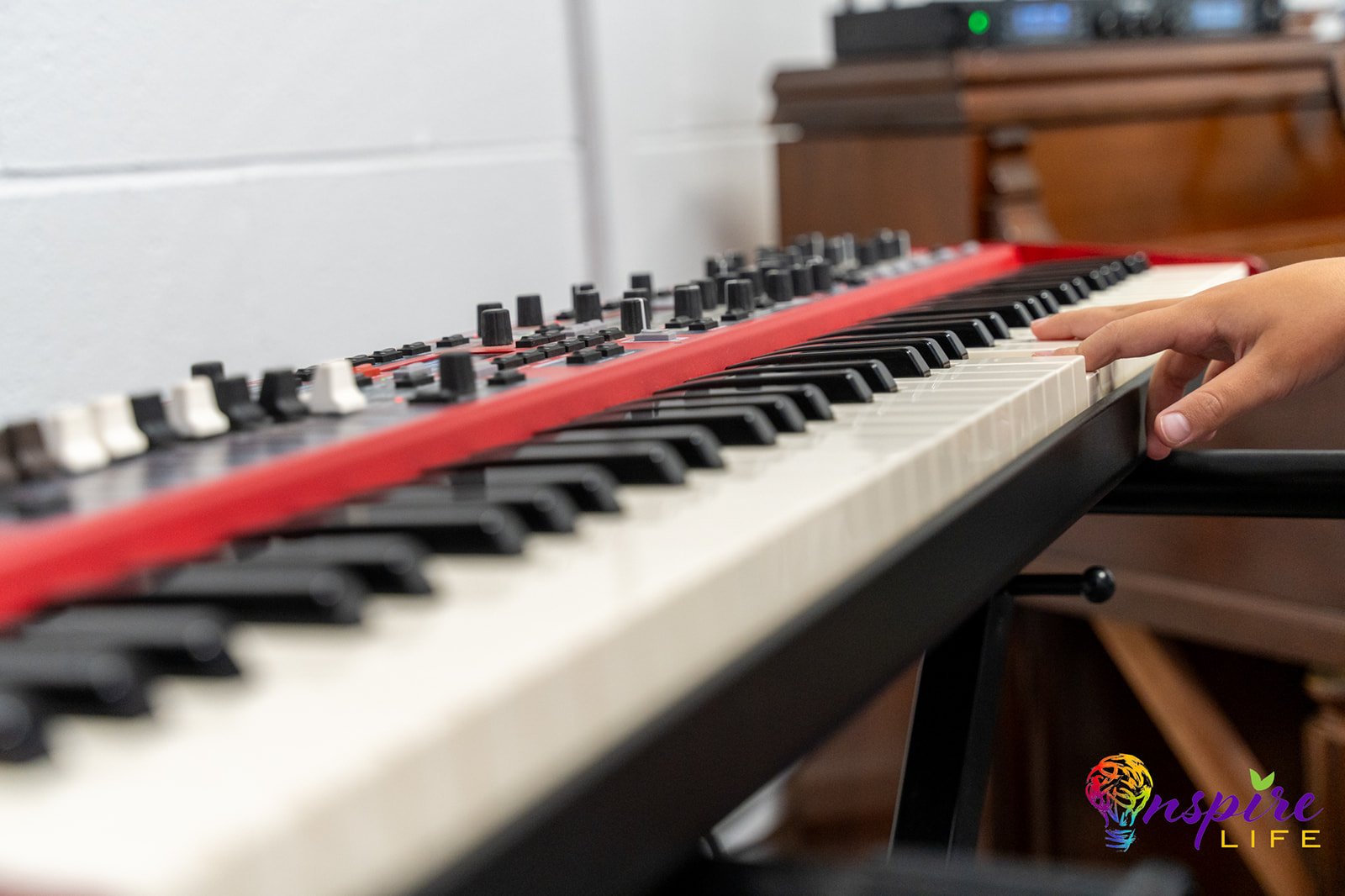
Creators lab
about the program
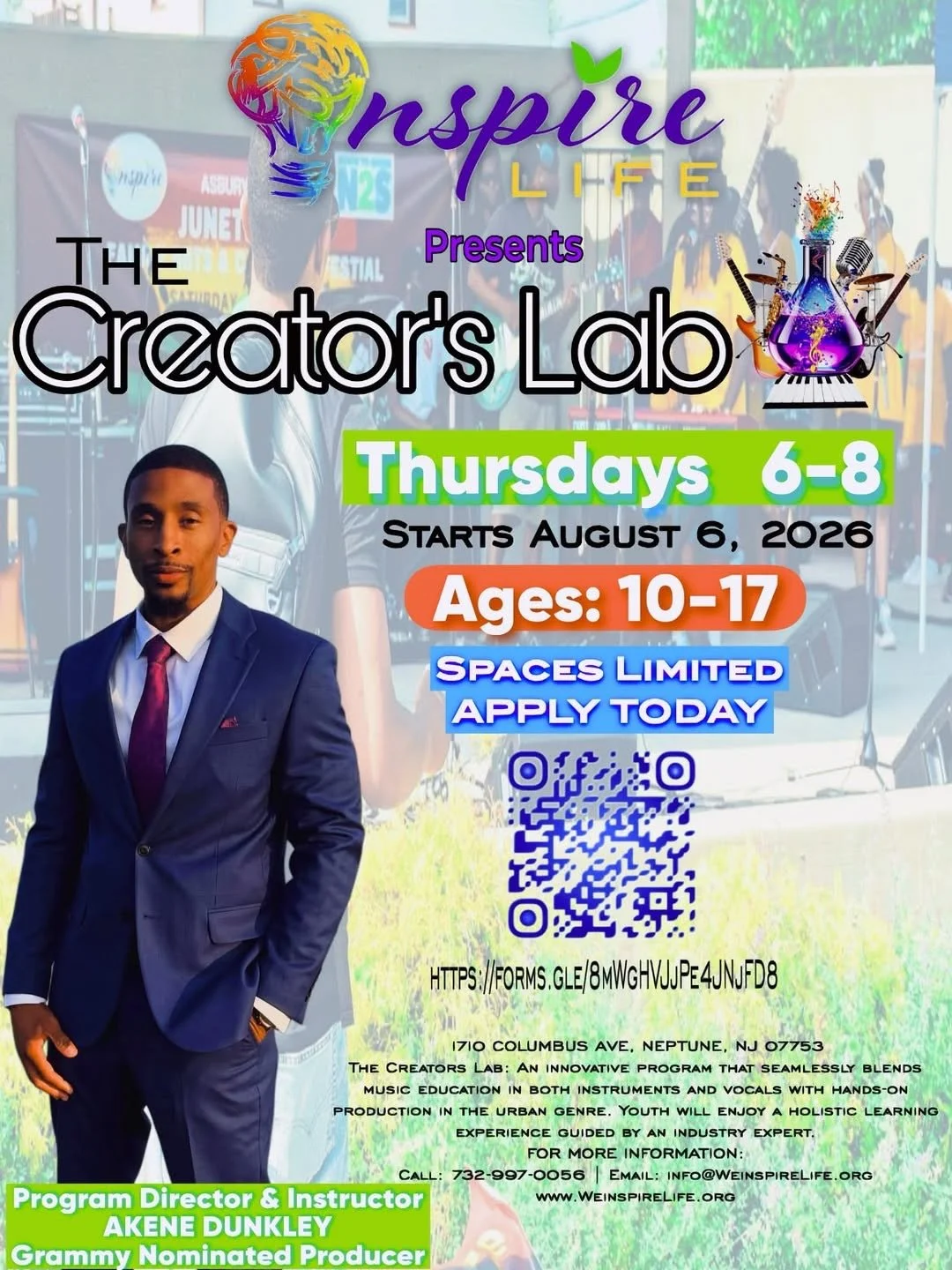
Creator’s Lab is where music, film, and creativity come to life.
Led by 3x Grammy-nominated producer Akene Dunkley, this program gives young people (ages 10 and up) the chance to create real music, produce videos, write songs, edit films, and explore their voice through art.
We focus on styles that speak to our community—Hip Hop, R&B, Gospel, and Jazz—and bring in real professionals who work in the industry to teach and mentor our youth.
What You’ll Do
In Creator’s Lab, creatives get hands-on experience with:
Songwriting and music production
Recording and mixing in professional studios
Video editing and filmmaking
Live performances and showcases
Creative writing and storytelling through film
And thanks to our original curriculum, they don’t just make music—they understand it.

Symphony of Numbers: Learning Music Through Math
We’re proud to use a unique, easy-to-learn music curriculum called Symphony of Numbers, designed by our very own program director.
This method uses a simple number system that:
Connects math to music
Makes learning everything from basic rhythms to advanced musical theory fun and accessible
Helps students understand how music works, not just how it sounds
It’s music education like you’ve never seen before—creative, clear, and confidence-building.

Why It Matters
We believe creativity is more than talent—it’s a way to express who you are, tell your story, and shape your future.
Creator’s Lab helps youth:
Build confidence and critical thinking skills
Learn real tech and creative skills
Discover possible careers in music, film, and media
Use their voice to make a difference in the world around them
Tangible Skills Creatives Will Learn in Creators Lab
Music production: Understanding digital audio workstations (DAWs), music theory, and sound engineering.
Video production: Filming, editing, and producing high-quality content using industry-standard software and equipment.
Instrument proficiency: Learning to play instruments like piano, drums, or guitar.
Songwriting: Crafting lyrics and composing original music.
Film editing: Using software to cut and edit videos, create transitions, and add sound effects.
Sound engineering: Recording, mixing, and mastering audio for music and film.
Technical literacy: Learning to navigate the latest software for music and video production.
Soft and Interpersonal Skills
Creativity and self-expression: Using the arts to explore identity and voice.
Collaboration: Working with peers and mentors on creative projects.
Critical thinking and problem-solving: Finding solutions in both creative and technical challenges.
Time management: Managing deadlines and project timelines.
Emotional intelligence: Understanding and managing emotions, both personally and through artistic expression.
Confidence and self-esteem: Building belief in their creative abilities and value as individuals.
Leadership: Taking initiative in projects and guiding others.

Goals of CreatoRs Lab
Close the digital gap. Give young people in underserved communities the tools and tech they need to create — not just consume — so they’re ready for careers in creative industries.
Make creators, not just consumers. Teach kids how to produce music, film and other creative art so they see themselves as active makers in their communities.
Boost academics through creativity. Mix literacy and math into creative projects to improve learning in a fun, hands-on way — especially where traditional outcomes are weak.
Let youth find their voice. Provide creative outlets that help teens explore who they are and connect with real-world careers in music, film and tech.
Offer a safe, supportive zone. Create a space where teens can be independent, collaborate with peers, build social-emotional skills — all without judgment.
Teach real-world, professional tools. Train participants in industry-standard software and equipment so they gain skills that translate directly into job paths.
Empower with confidence and drive. Use creative achievement to build self-esteem, spark initiative and prepare teens for growing creative industries.
Honor teen independence. Rather than just prepping teens for work, we give them room to explore and express themselves, to be teens, to experiment and grow — free of the extra burden they often carry outside the program.